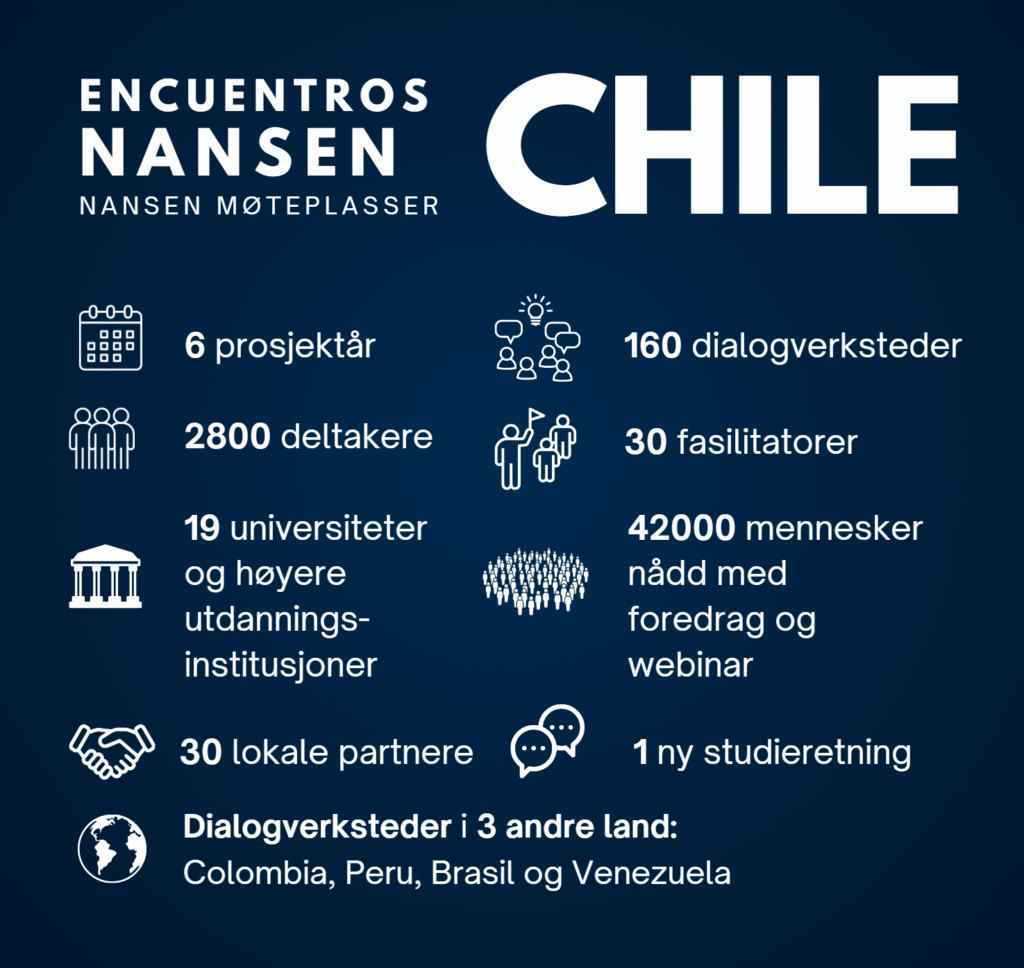
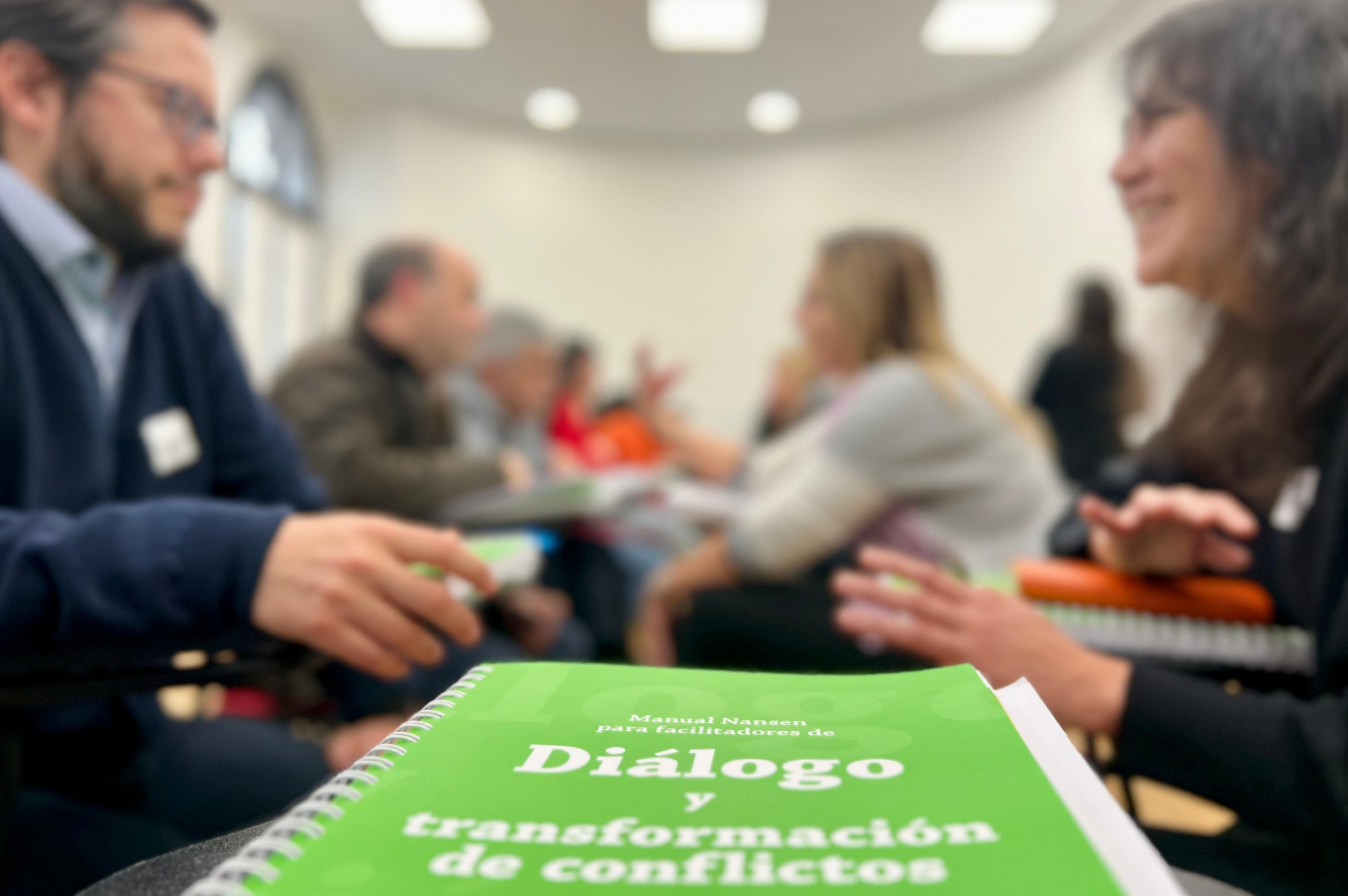
The project has conducted more than 500 dialogue activities in Chile, with over 40,000 participants, 30 local partners, a handbook translated into Spanish and Mapudungun, and a solid effort from a dedicated team in Chile under the leadership of project manager Alfredo Zamudio.
The work in Chile has had two main components:
1) National: Encuentros Nansen, a dialogue process that began during the unrest in October 2019, with 31 confidential conversations between the government, civil society, academia, students, and the private sector.
2) Regional: The work continued following a request from seven universities in Araucanía (the Mapuche area) in southern Chile, which led to 81 dialogue workshops with over 1,400 participants in Araucanía. In addition, a further 80 workshops have been conducted in other parts of the country, with a total of 2,800 people participating.
In addition to these 160 basic workshops, the project has conducted a workshop in facilitation. The project has also collaborated with 10 institutions in Colombia, Brazil, and Peru, including universities, civil society, and national institutions, and has carried out physical workshops, in addition to webinars for several other countries in the region, including Venezuela.
Findings and Further Dialogue Work
The team in Chile has documented all the work along the way, including a report on the work with Encuentros Nansen.
The team in Chile has conducted a study on the impact of the capacity-building work, with a larger survey of around 600 responses. The study is to be published in December and will be shared with some of our key partners. It is especially noted that 94% of participants have used one or more dialogue tools they learned in the course and have encountered two major obstacles:
- Resistance to change (74%)
- Lack of time (62%)